
IP67 bei Steckverbindern:
Warum die Schutzart allein nicht ausreicht
IP67 klingt zunächst nach einem hohen Maß an Sicherheit. Ein Steckverbinder mit dieser Schutzart ist gegen Staub und zeitweiliges Untertauchen geschützt.
Für viele industrielle Anwendungen ist das eine wichtige Voraussetzung. Trotzdem bedeutet eine hohe IP-Schutzart nicht automatisch, dass ein Steckverbinder für jede anspruchsvolle Umgebung geeignet ist.
Denn für eine dauerhaft zuverlässige Verbindung muss immer die gesamte Anwendung betrachtet werden.
Was bedeutet IP67?
Die IP-Schutzart beschreibt, wie gut ein Gehäuse gegen das Eindringen von Fremdkörpern und Wasser geschützt ist.
Bei IP67 stehen die beiden Ziffern für unterschiedliche Schutzwirkungen:
6: staubdicht und vollständig gegen das Eindringen von Staub geschützt.
7: Schutz gegen zeitweiliges Untertauchen unter definierten Prüfbedingungen.
Damit liefert die Schutzart eine wichtige Information für die Auswahl eines Steckverbinders.
Sie beantwortet jedoch nicht alle Fragen, die für die spätere Anwendung relevant sind.
Warum IP67 allein nicht genügt
Ein Steckverbinder kann die erforderliche Schutzart erfüllen und trotzdem für eine konkrete Anwendung ungeeignet sein.
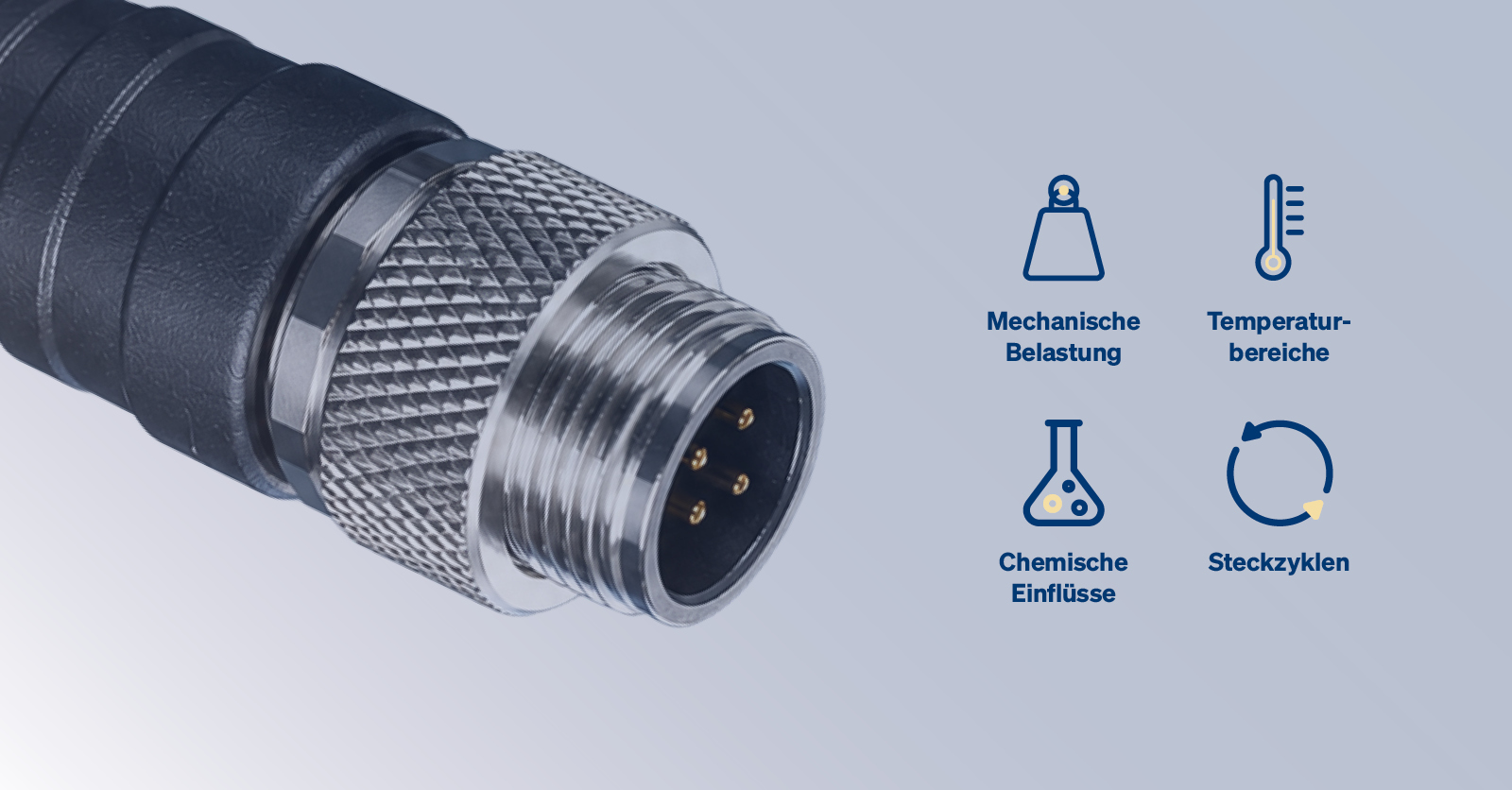
Der Grund: Im realen Einsatz wirken häufig mehrere Belastungen gleichzeitig.
Temperaturwechsel, Vibrationen, chemische Einflüsse oder häufiges Stecken und Trennen können eine Verbindung über Jahre hinweg beanspruchen.
Deshalb sollten neben der IP-Schutzart weitere Faktoren berücksichtigt werden.
1. Mechanische Belastungen
Vibrationen und Bewegungen gehören in vielen industriellen Anwendungen zum Alltag.
Maschinen, Motoren oder bewegliche Baugruppen können Steckverbindungen dauerhaft mechanisch beanspruchen.
Bei der Auswahl sollte deshalb betrachtet werden, wie stark die Verbindung belastet wird und ob Verriegelung, Kabelabgang und Zugentlastung für diese Bedingungen geeignet sind.
2. Temperaturbereiche
Nicht jeder Steckverbinder ist für jeden Temperaturbereich ausgelegt.
Besonders relevant sind Anwendungen mit sehr niedrigen oder hohen Temperaturen sowie häufigen Temperaturwechseln.
Diese können Materialien, Dichtungen und Leitungen langfristig beanspruchen.
Die zulässigen Temperaturbereiche der verwendeten Komponenten sollten deshalb immer mit den tatsächlichen Bedingungen der Anwendung abgeglichen werden.
3. Chemische Einflüsse
Öle, Kühlmittel, Reinigungsmittel oder andere Chemikalien können Kunststoffe und Dichtungen beeinflussen.
Eine hohe IP-Schutzart sagt zunächst nichts darüber aus, wie beständig die eingesetzten Materialien gegenüber bestimmten Medien sind.
Gerade in industriellen Umgebungen lohnt es sich daher, mögliche chemische Belastungen bereits bei der Auswahl zu berücksichtigen.
4. Steckzyklen
Wie häufig wird eine Verbindung gesteckt und wieder getrennt?
Bei einer Verbindung, die einmal montiert und anschließend über Jahre nicht geöffnet wird, entstehen andere Anforderungen als bei einem Steckverbinder, der regelmäßig gelöst werden muss.
Die vorgesehene Anzahl der Steckzyklen und die mechanische Ausführung sollten deshalb zur tatsächlichen Nutzung passen.
5. Die gesamte Verbindung betrachten
Nicht nur der Steckverbinder selbst entscheidet darüber, wie zuverlässig eine Verbindung geschützt ist.
Auch Leitung, Kabelverschraubung, Dichtung, Montage und die konkrete Einbausituation spielen eine Rolle.
Eine zuverlässige Verbindung entsteht deshalb immer aus dem Zusammenspiel aller Komponenten.
Schutzart ist wichtig – aber nur ein Teil der Lösung
IP67 ist ein wichtiges Auswahlkriterium für Steckverbinder. Die Schutzart sollte jedoch nicht isoliert betrachtet werden.
Eine geeignete Verbindung berücksichtigt zusätzlich:
-
mechanische Belastungen
-
Temperaturbereiche
-
chemische Einflüsse
-
Steckzyklen
-
Einbausituation
-
Leitung und Kabelabgang
Erst die Kombination dieser Faktoren zeigt, ob eine Verbindung langfristig zur Anwendung passt.
Weiter zur Lösungsseite wasserdichte Steckverbinder.
Welcher Steckverbinder passt zu Ihrer Anwendung?
Engelking unterstützt Sie bei der Auswahl von Steckverbindern für unterschiedliche industrielle Anforderungen. Dabei betrachten wir nicht nur einzelne technische Daten, sondern die Bedingungen der gesamten Anwendung.
Sprechen Sie uns gerne an – gemeinsam finden wir eine passende Lösung.