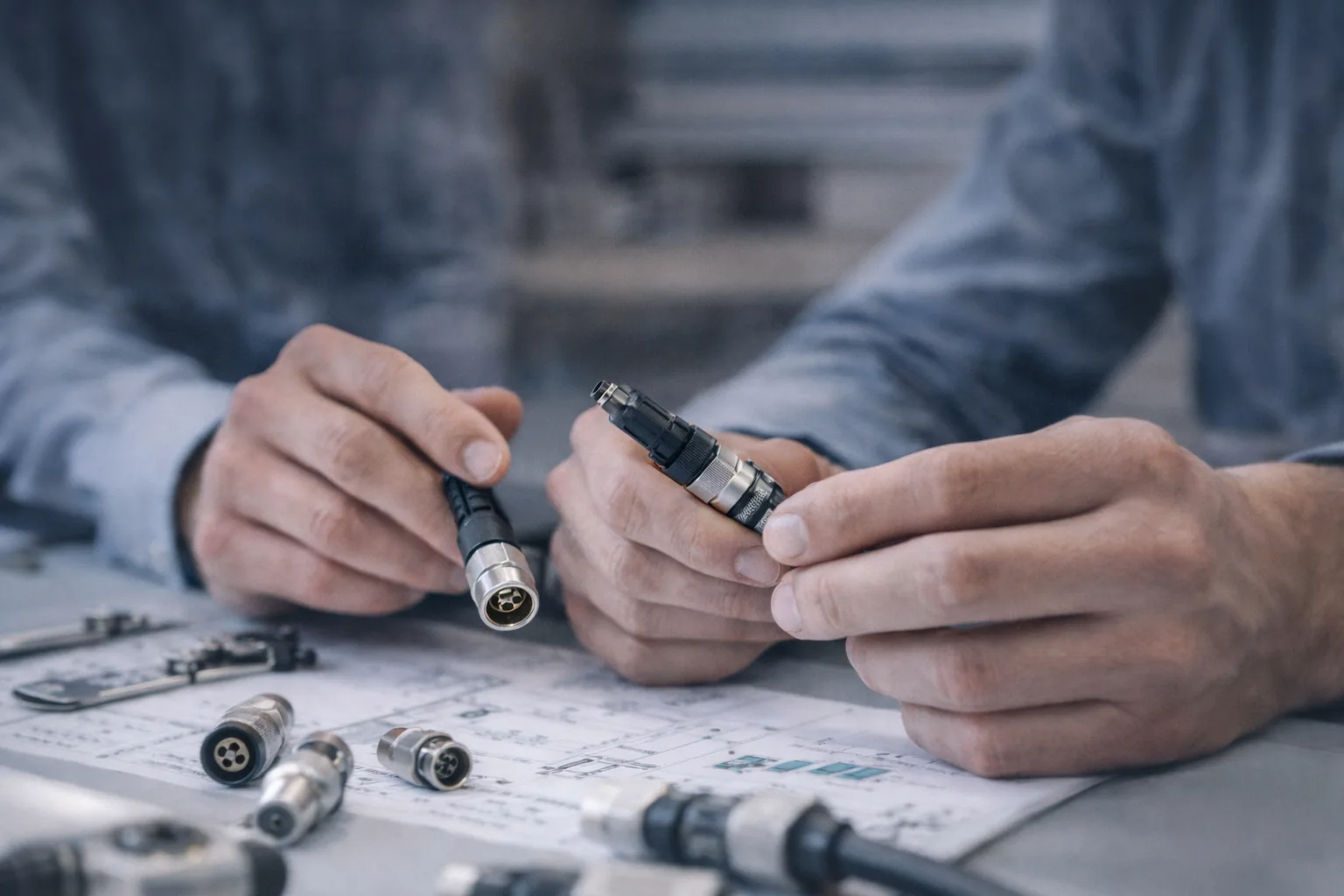
Choosing the right M12 connector
What really matters when it comes to coding, IP protection and application
Not all M12 connectors are the same
Why many problems are caused not by the connector – but by choosing the wrong one.
M12 connectors are considered standard in many applications. That is exactly what often leads to wrong decisions: connectors that look alike can behave completely differently in use.
The result:
failures, downtime or unnecessary costs are often caused not by the product itself – but by a choice that does not suit the application.
At Engelking, we help companies choose M12 connectors on sound technical grounds and integrate them reliably into their application.
Why “standard” is often a problem with M12
In practice, we often hear:
“It’s just a standard M12 connector.”
That very assumption often causes problems later on.
Because “standard” does not automatically mean:
suitable for the application
rugged enough
reliable in the long term
technically correctly designed
Many faults do not arise during operation, but at the selection stage.
This is especially critical with:
vibration
moisture
thermal stress
moving applications
high data rates
continuous industrial loads
The problem:
The effects usually do not show up right away – but only later in the field.
And that is when it gets expensive.
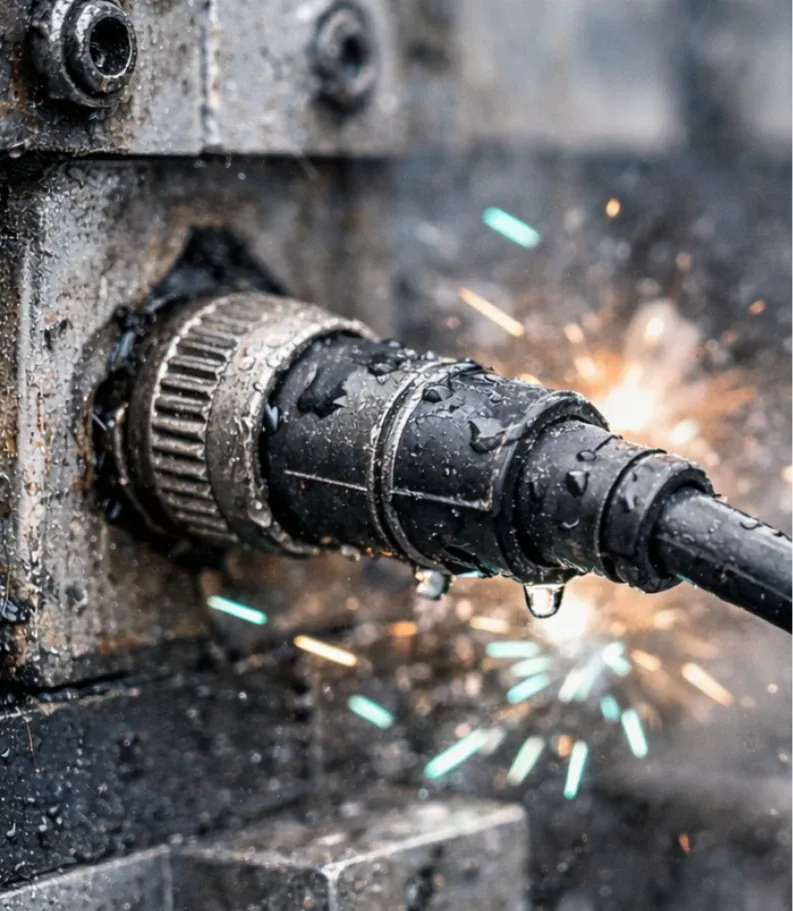
What really matters with M12 connectors
Coding determines the application
Not every M12 connector is suitable for every application.
Depending on the coding, connectors are designed, for example, for:
signal transmission
data communication
Industrial Ethernet
power supply
The right coding is essential for function and safety.
IP protection affects reliability
In industrial environments in particular, moisture, dust and cleaning play a major role.
The right protection rating determines whether a connection works reliably over the long term or fails early.
The most common ratings are:
IP67
IP68
IP69K
Which rating makes sense always depends on the actual environment.
Mechanics and materials affect service life
Mechanical stress is also frequently underestimated.
This includes, among other things:
vibration
frequent mating cycles
tensile loads
tight installation spaces
temperature changes
Not every solution is designed for continuous industrial use.
The most common mistake: choosing by size instead of function
Many M12 connectors look almost identical. However, the technical differences often lie in the details.
That is why it is not enough to decide based only on:
size
price
appearance
availability
What always matters is:
how and where the connector will be used.
Two connectors that look alike can behave completely differently in real-world use.
Typical applications for M12 connectors
Today, M12 connectors are used in a wide range of industrial applications, for example in:
machine and plant engineering
automation technology
sensor technology
Industrial Ethernet
robotics
conveyor technology
outdoor applications
food industry
Depending on the industry and environment, the requirements can differ considerably.
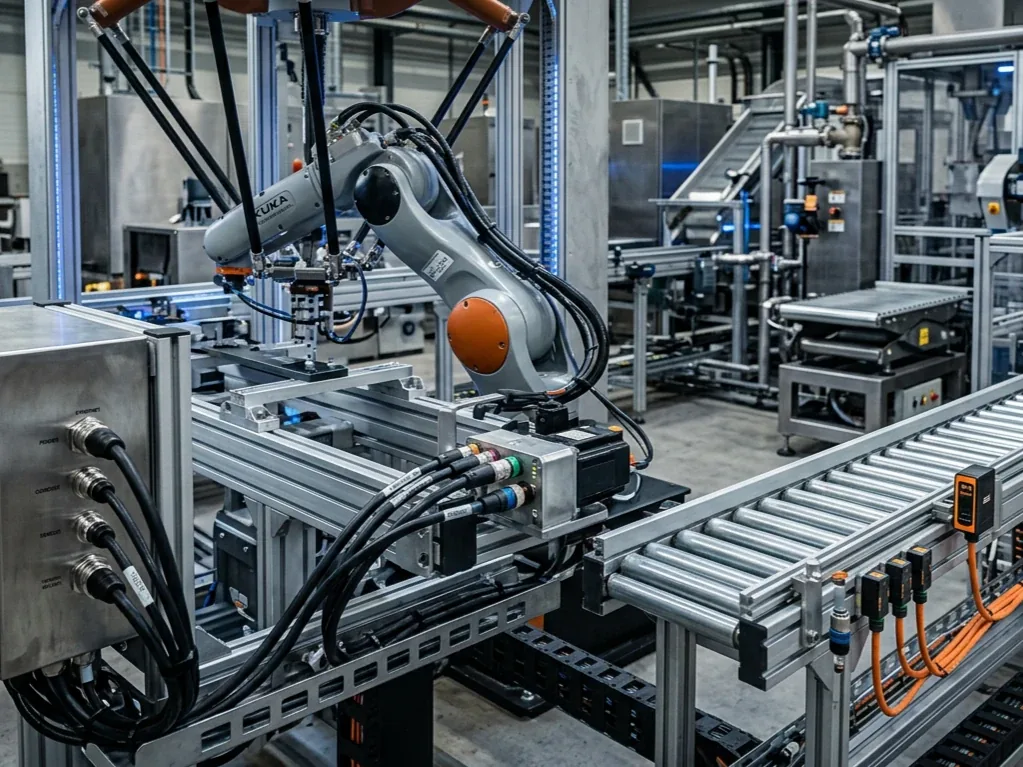
Our approach: understanding requirements instead of just picking products
The best solution does not come from a quick product choice – but from a technical assessment of the application.
That is why we look at, among other things:
operating environment
mechanical stress
protection requirements
electrical requirements
available space
assembly conditions
The result is solutions that not only fit, but work reliably in the long term.
Find out more on our solutions page on waterproof connectors.
Finding the right M12 solution together
Would you like to check which M12 connector suits your application?
We are happy to support you with the technical assessment and selection of suitable solutions.